Flat floors first, then the big tile
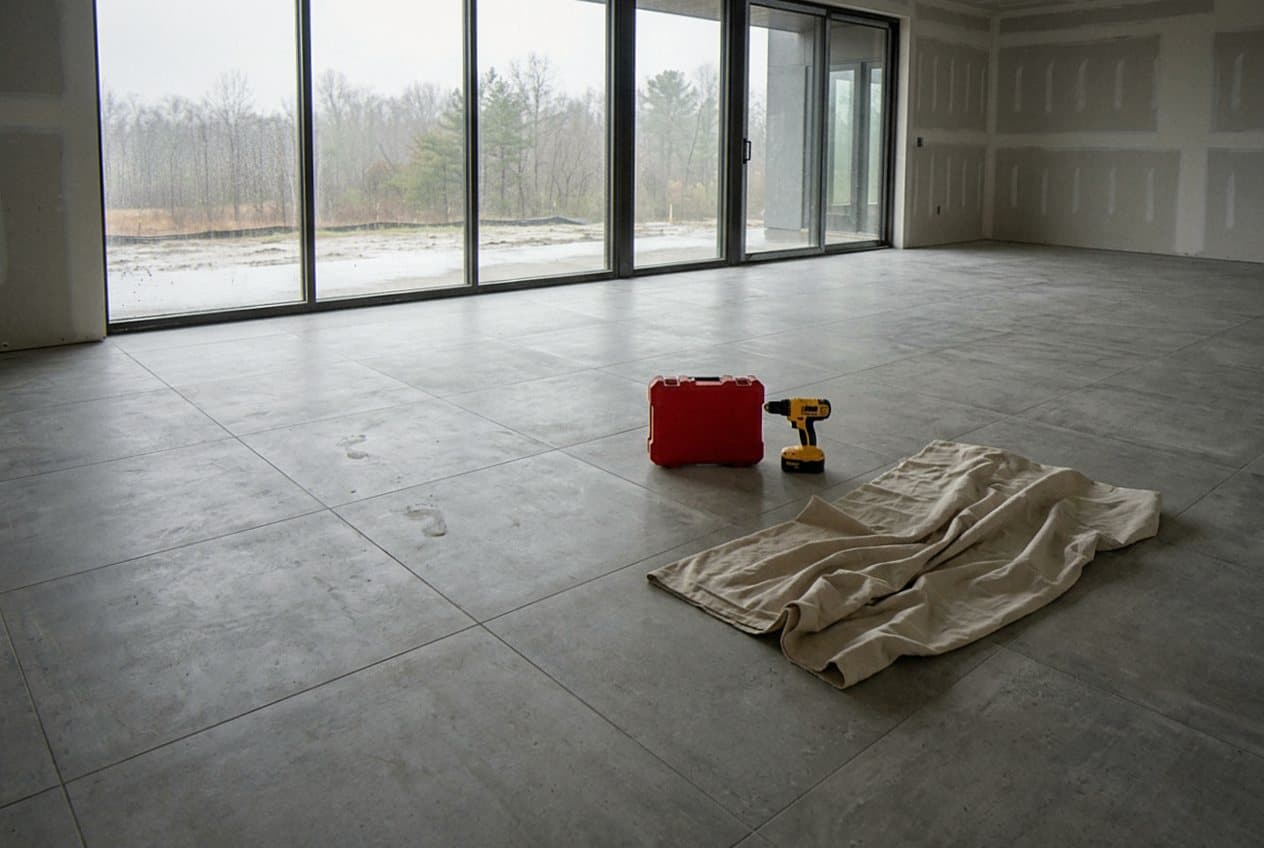
Large format tile covers more floor with fewer grout lines. That is the look most South Bend homeowners are after when they call us about a bathroom or a kitchen. Tile that measures 12 by 24, 24 by 24, or 12 by 48 reads as one calm surface instead of a busy grid. It also punishes a floor that is not flat. A small dip nobody notices under a 6 inch tile turns into a rocking corner and a raised edge under a 24 inch one. The tile cannot bend to follow the slab, so the slab has to come up to meet the tile. That is where the real work sits, and it is the step most people never see. We start every job with a 10 foot straightedge and a laser. The tile industry standard for pieces with any side 15 inches or longer is tight: no more than an eighth of an inch of variation over 10 feet. Older houses around River Park and Sunnymede almost never show up that flat. Basement slabs across Saint Joseph County heave and settle over decades of freeze and thaw. Wood subfloors in the 1920s bungalows sag between joists, and you can feel the give when you walk the room in socks. So we flatten first. On concrete we grind the high spots and pour a self leveling underlayment into the low ones. On wood we check joist spacing and bounce, add a layer where the framing is light, then patch and level until the straightedge stops rocking. That prep decides how the finished floor feels underfoot. Skip it and you get lippage, which is the little cliff between one tile and the next. You stub a toe on it. A mop catches on it. Grout cracks out of the high joints within a year because the edges never had full support. Do the prep and the same tile lays flat and quiet, and nobody in the house ever thinks about the floor again. That is the whole point of setting big tile, and it is why we spend the first day of most jobs on a surface you will never look at.
Setting large tile is a coverage problem more than a speed problem. Under a small tile, a few gaps in the mortar do not matter much. Under a 24 by 48 plank, a void is a crack waiting for the day somebody drops a cast iron pan on it. So we use a mortar made for large and heavy tile, mix it stiff enough to hold a ridge, and comb it in one direction with a half inch notch trowel. Then we butter the back of the tile with a flat pass. Set it, slide it across the ridges to collapse them, and beat it in. The goal is simple. When we lift a piece to check our work, the back should read as nearly solid mortar, not a set of stripes. The industry asks for roughly 80 percent contact in a dry room and about 95 percent in a wet one, with full support under every corner and edge. Grout joints get planned, not guessed. Big tile rarely comes perfectly flat out of the box. A slight bow through the center is normal and the factory allows for it. A wider joint absorbs that variation, so we usually set an eighth of an inch or a bit more instead of the hairline joint people ask for after seeing a showroom photo. We also keep the offset near a third of the tile length. The old half brick layout looks great on paper and then shows every high center once afternoon light rakes across the floor. Then comes the part nobody thinks about until it fails. Tile needs somewhere to move. We hold the field back off the walls, fill that gap with a flexible sealant instead of grout, and keep the same rule at thresholds, tubs, and cabinet bases. Over concrete we often run an uncoupling membrane so a small crack in the slab does not travel straight up into your new floor. Basements in this part of Indiana shift with the seasons, and that membrane is cheap protection against a hairline in the slab becoming a hairline in the tile. On a long run, like a hallway that opens into a kitchen, we plan a movement joint into the field. Otherwise the floor picks the spot for you, and it never picks a good one.
- Fewer grout lines means far less scrubbing. A bathroom floor set in 24 inch tile carries roughly half the joint length of the same floor in 12 inch tile. Grout is the part that stains, and in South Bend the winter mix of road salt and gray slush finds every joint inside the back door. Bigger pieces give that grime less to grab. A damp mop handles most of it, and you stop attacking the floor with a toothbrush every spring.
- The prep is part of the job, not a surprise we spring on you later. We measure and check the floor before we ever talk about a start date, so flattening a wavy slab or firming up a bouncy subfloor is written into the plan from day one. You hear what your floor actually needs and why it needs it. Nobody enjoys learning on the second morning that the work grew overnight, and we do not run jobs that way.
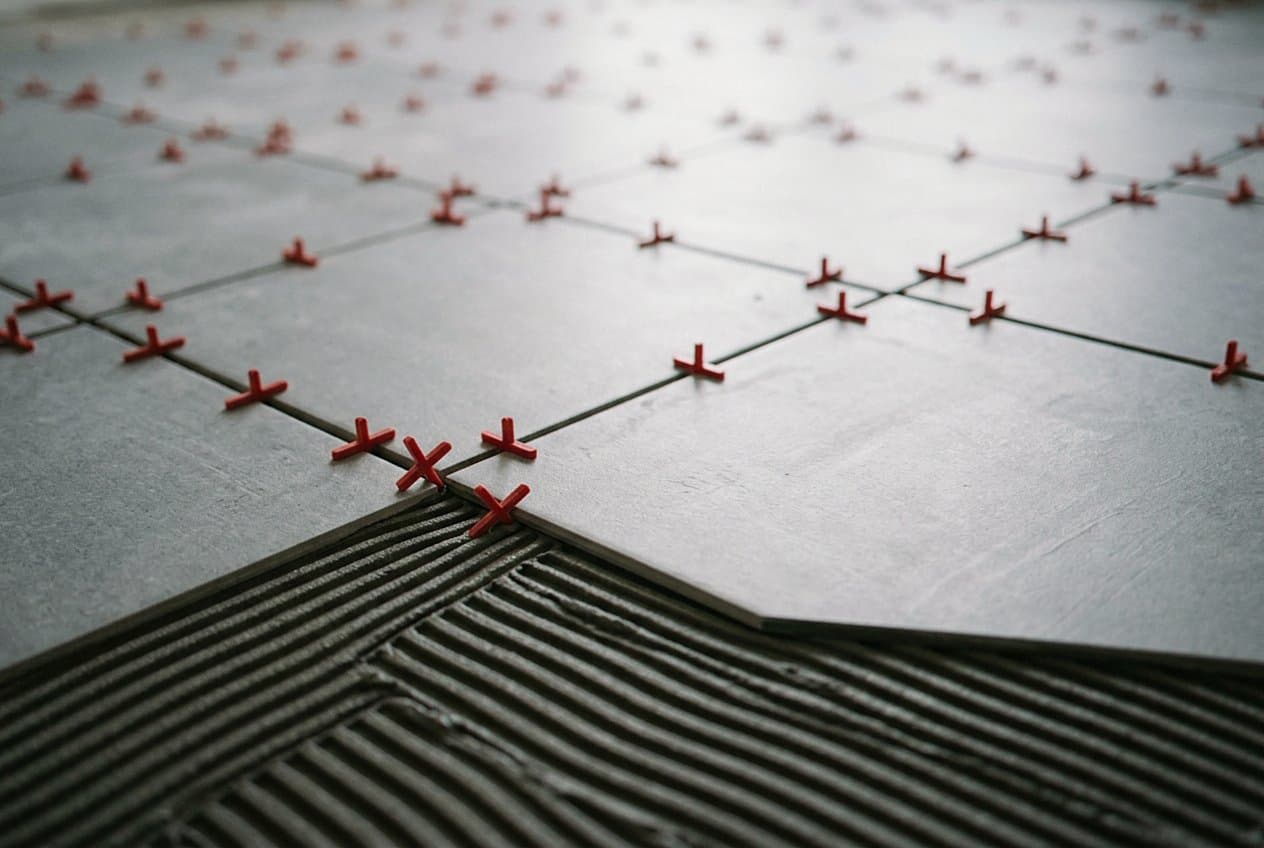
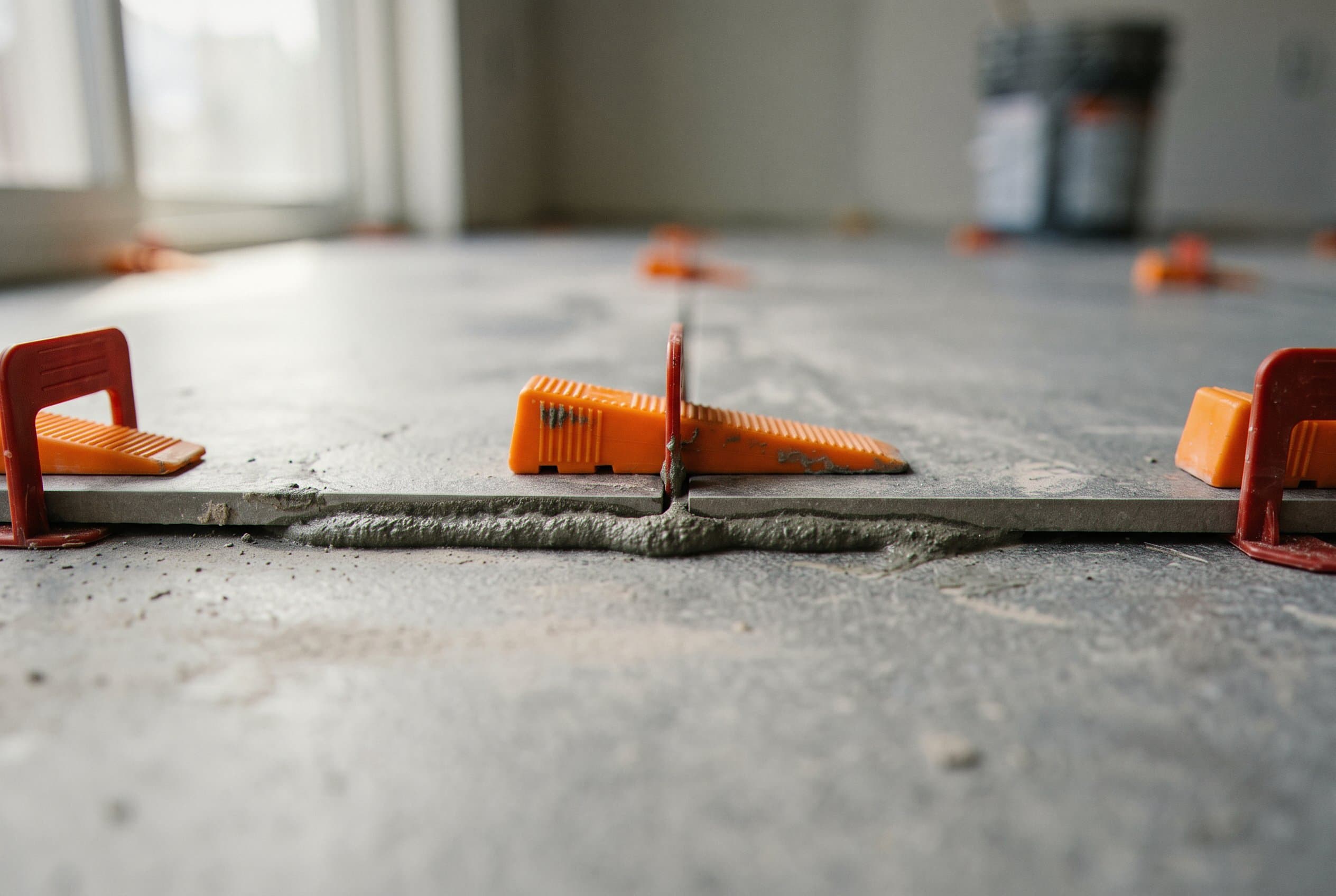
- Lippage stays under control because we plan for it. We set big tile with clip and wedge leveling systems, butter the back of every piece, and keep the pattern offset near a third instead of a running half brick. That last detail matters more than it sounds. Most large tile crowns slightly through the middle, so a wide offset parks the high center of one tile against the low edge of the next, and you feel that ridge with a bare foot.
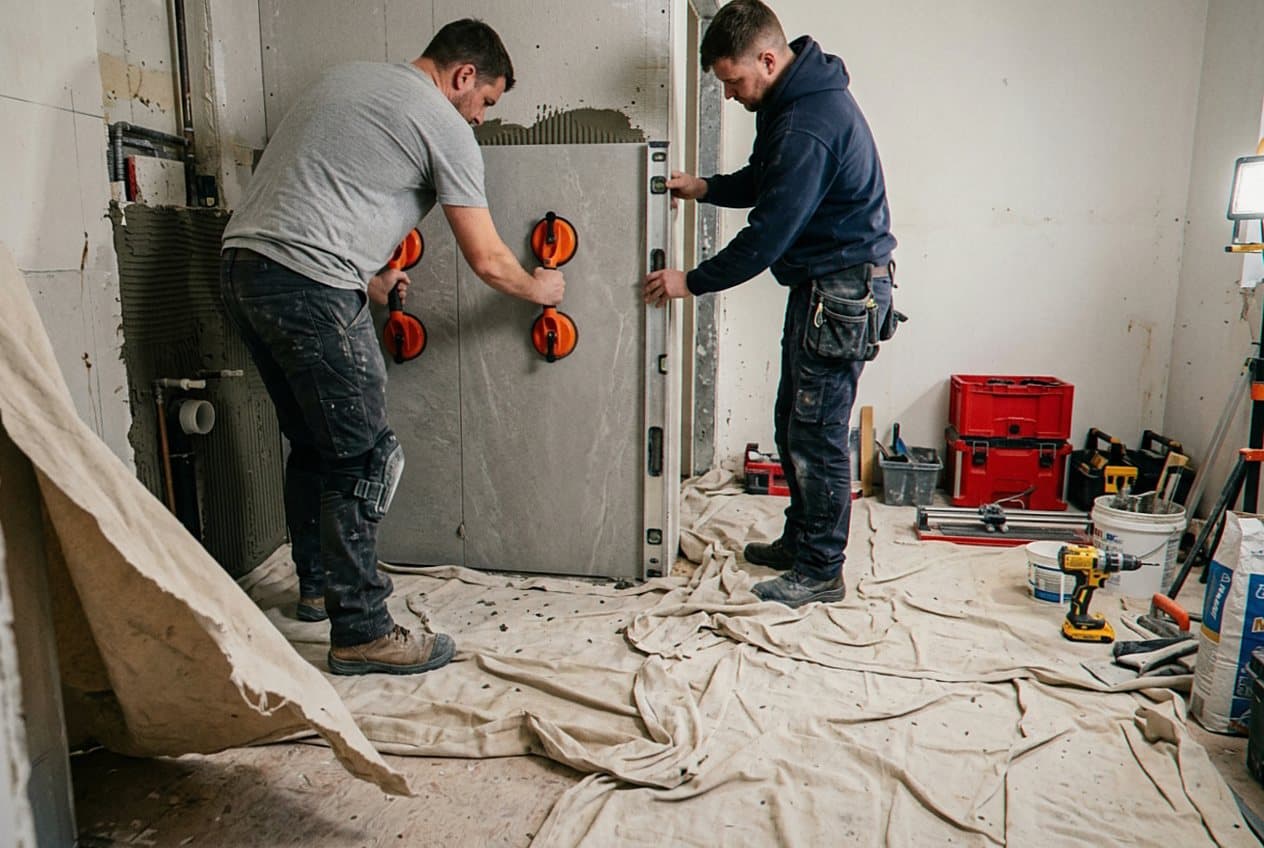
- Walls and showers get the same care as floors. Large tile on a shower wall needs a flat substrate behind it, proper waterproofing, and a mortar rated to hold heavy pieces without sagging while it cures. We also plan the layout so a full tile lands where your eye goes first and the cuts end up tucked in a corner or behind a fixture. That is the difference between a shower that looks built and one that looks patched.
- Handling is half the battle with a 24 by 48 piece. We cut on a rail saw with a scoring track, carry the long ones with suction cups and a second set of hands, and map out every cut around drains, thresholds, and cabinet toe kicks before anything touches mortar. Broken pieces and mismatched runs cost days. So we take layout slowly, then set fast and clean once the plan is locked.
Most of the large tile we set in South Bend lands in four places. Bathroom floors and shower walls come first, because that is where fewer joints pay off every single week. Kitchens come second, usually in a plank shape that runs the long way through the room. Then mudrooms and back entries, which take the worst of a Michiana winter. Basement floors round it out, in houses where the slab is already close to flat. Fireplace surrounds show up too, mostly in older homes near Notre Dame where a tired brick face is ready for something calmer. Radiant heat changes the plan, so we ask about it early. Large tile sits well over a heat mat or a loose cable in a bathroom, but the mat has to be fully buried and the setting material has to fill every void under the tile. Air pockets under a heated floor turn into hollow spots and cracked pieces two winters on. Salt matters too. Boots track a slurry of road salt and gray slush through the back door from December into March, and it sits in the joints. Bigger tile gives that grime less to hold, and a sealed joint keeps the rest from soaking in. Our process stays plain. We come out, look at the room, put a straightedge on the floor, and tell you exactly what we find. If the floor needs a pour, we say so before you go pick tile. If the piece you fell in love with is bowed enough to fight us on a wall, we say that too, because a warped 24 by 48 plank in a shower is a bad week for everybody. We talk through layout while the room is still empty: where the full tile lands, where the cuts hide, how the pattern meets a threshold or a drain. Then we set a start date and we show up on it. We work through South Bend, Mishawaka, Granger, Osceola, Roseland, New Carlisle, and the smaller towns around Saint Joseph County, and we answer our own phone when you call.
If you are picking out big tile for a bathroom, a kitchen, or a back entry, call us before you buy it. We will walk the room, run a straightedge across the floor, and tell you what the prep actually takes. You get a straight answer on layout, joint size, and how long the room sits out of service. Then we set it right the first time, and you get a floor that stays quiet under your feet for a long run of South Bend winters.