What a backsplash install actually looks like at your house
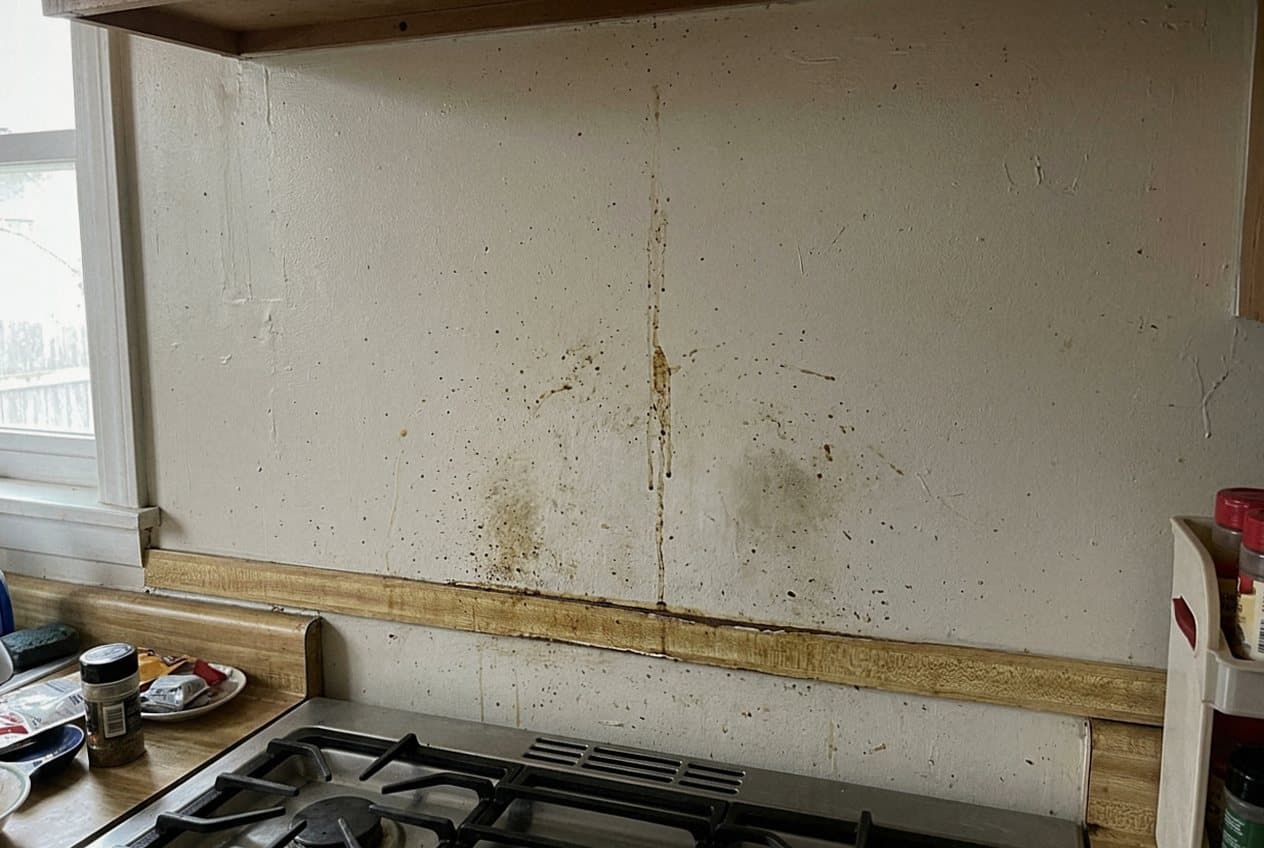
A backsplash is a small area with a lot of edges. The edges are where the real work sits. Your kitchen has outlets, a window sill, a range hood, a cabinet run that is not level, and a counter with a slope of its own. We start by pulling the covers off the outlets and checking the wall with a long straightedge. In most South Bend kitchens we find something. Older homes near River Park and the Near Northwest side have plaster over lath that bows in and out by a quarter inch across one run. We flatten what needs flattening before a single tile goes up. A wavy wall shows in the finished tile, and there is no fixing it after the grout dries.
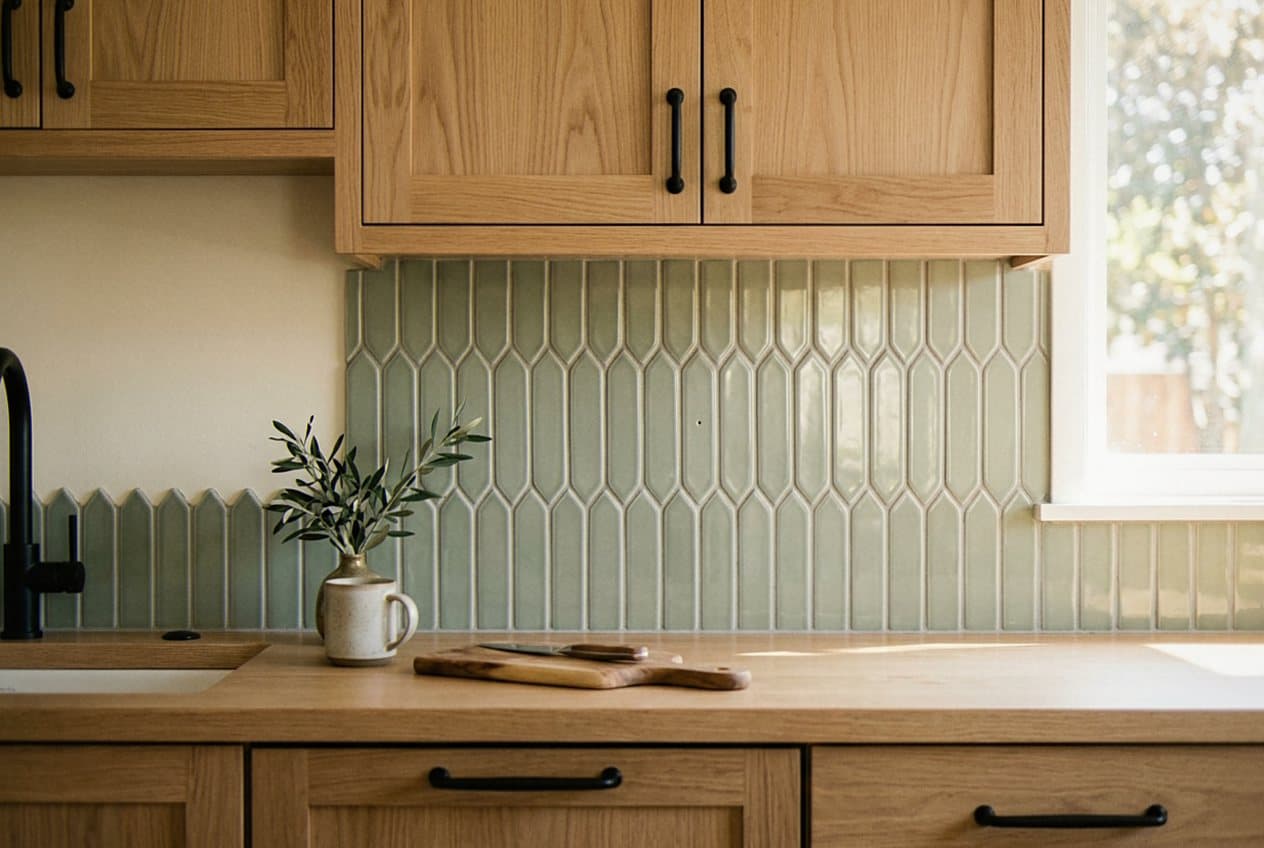
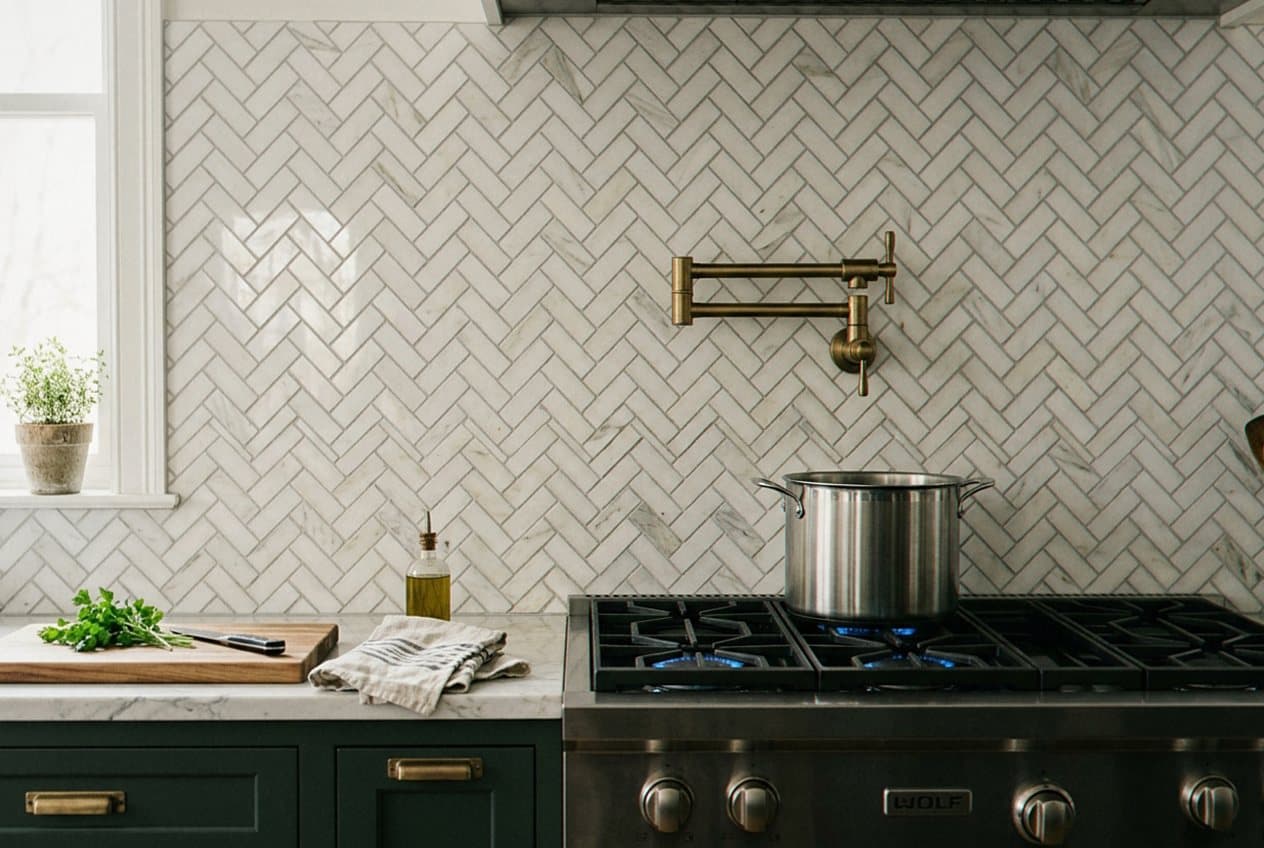
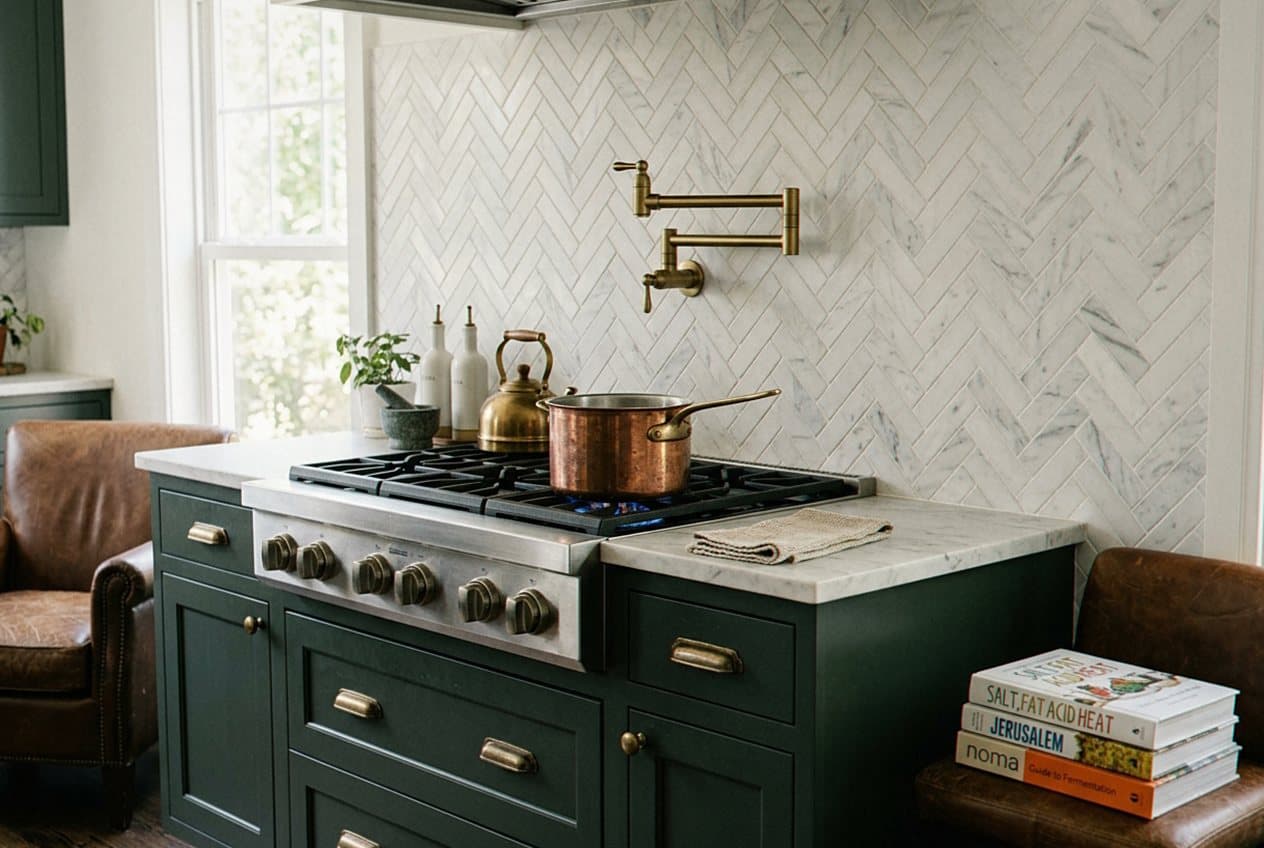
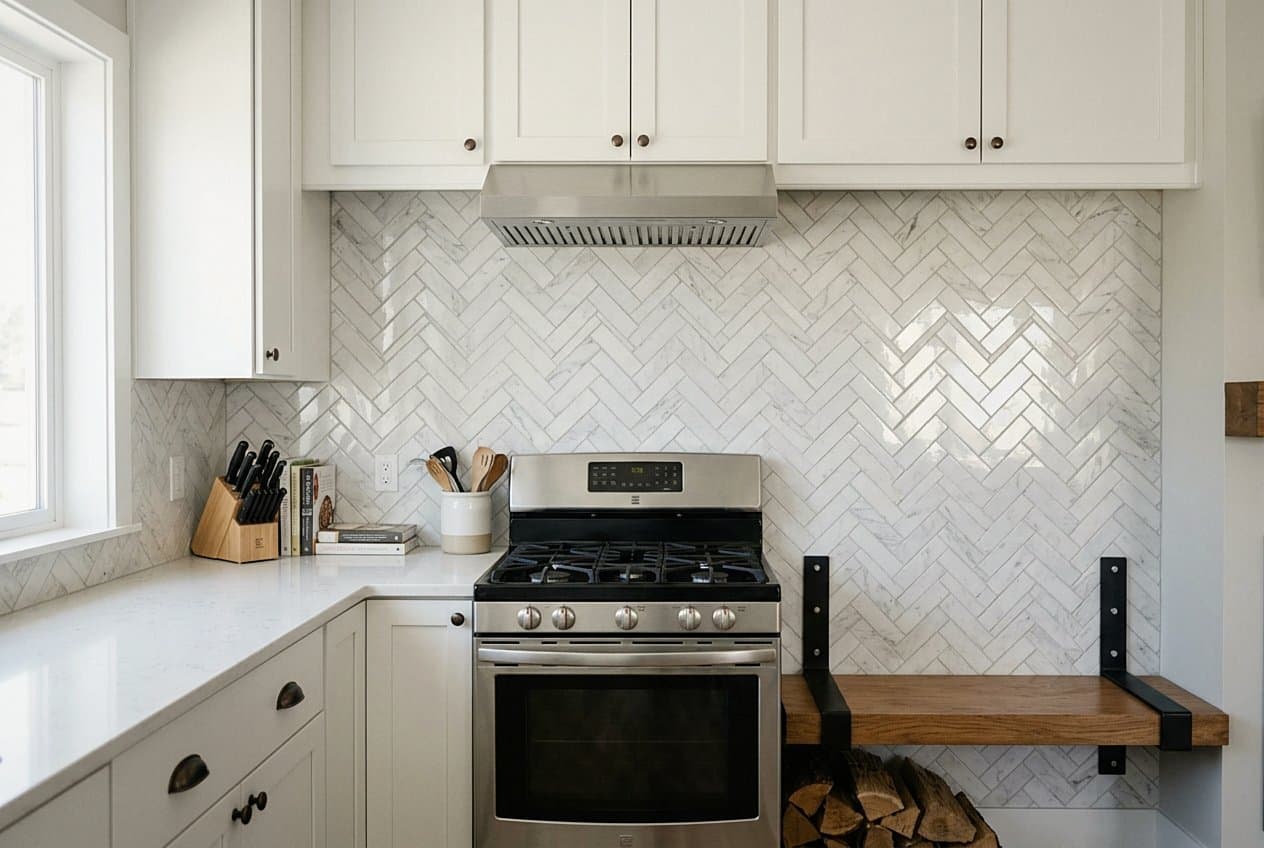
Layout is the next call and we make it with you standing right there. The center line matters more than people expect. Most folks want the tile to read as centered behind the range or the sink, and if we simply start at one end of the wall we end up with a sliver cut in the worst spot. So we dry lay a few rows on the counter, mark the wall in pencil, and show you where every cut will land before we mix a thing. If your kitchen has a window over the sink, we plan the courses so the tile meets that sill clean. Small choices like that separate a backsplash that looks built from one that looks stuck on.
- We cover the counters and the floor with heavy drop protection, so you get your kitchen back clean instead of dusty.
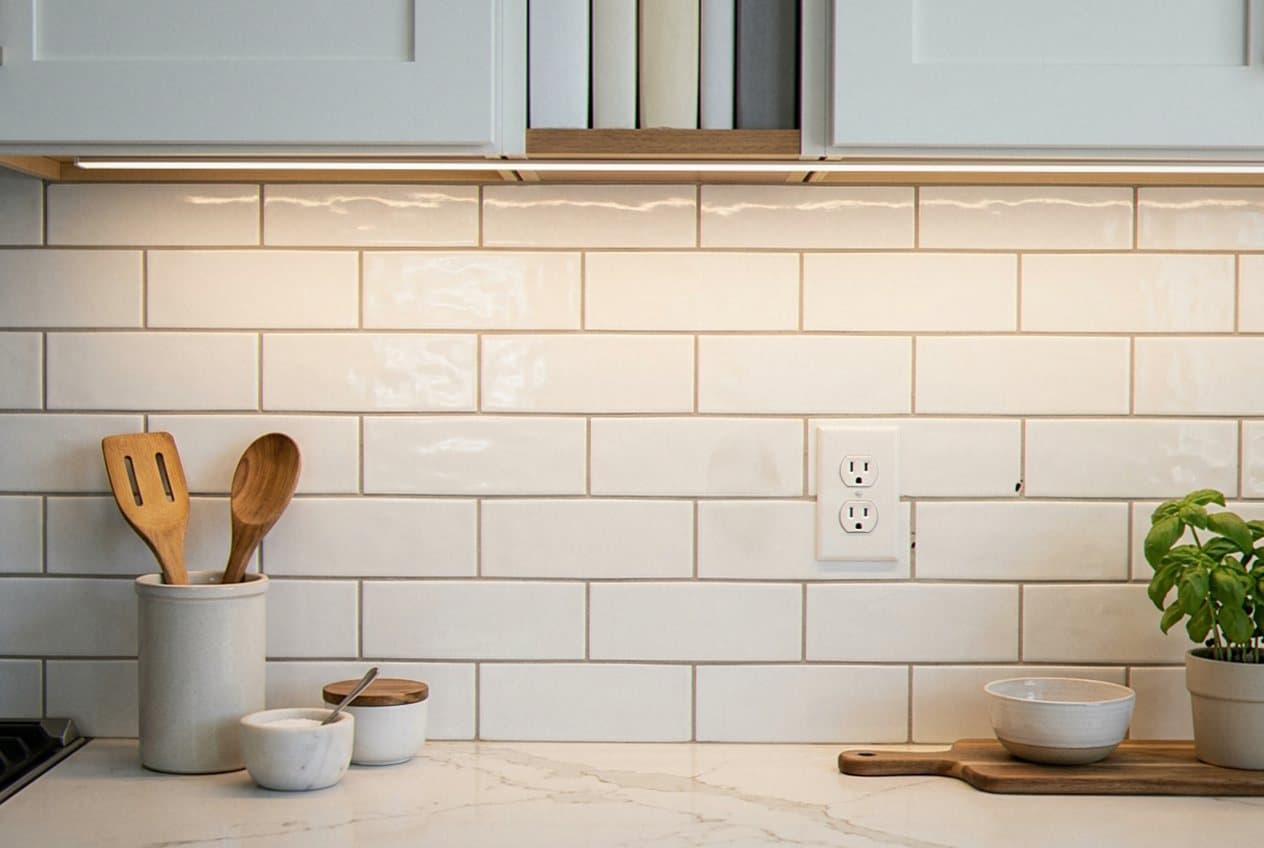
- We reset the outlet boxes properly so they sit flush with the new tile face, rather than sunk behind it.
- You see the layout marked on your own wall before we set anything, which means no surprise cuts in bad places.
- We cut around sills, ledges, and hood edges instead of hiding a gap behind a fat bead of caulk.
- The same crew is there from the first cut to the last wipe, so nothing gets lost between one day and the next.
Most kitchen backsplashes are a two visit job. Day one is prep, layout, and setting tile. We let the mortar cure overnight, then come back to grout, clean the haze, and run a bead of flexible sealant where the tile meets the counter and at the inside corners. That last step gets skipped a lot by other crews. A rigid grout joint at the counter line will crack the first time the cabinets move with the season, and South Bend swings hard from a humid August to a dry January. We use sealant there instead, tinted to match the grout, so you never notice it is a different material.
If you are ready to talk about your kitchen, call us. We will come out, measure the wall, look at the outlets and the counter, and tell you what the job really takes. Already picked your tile? Set the box out and we will look at it together. If you have not picked yet, we will tell you what tends to work in a kitchen your size and what tends to cause trouble down the road. We work across South Bend, Mishawaka, Granger, Osceola, and the rest of Saint Joseph County, and we answer our own phone.